Is Romania Traditional or Modern? What Travelers Find on the Ground
Anyone preparing to visit Romania eventually asks whether the country is traditional or modern. Romania lies in southeastern Europe and borders Hungary, Serbia, Bulgaria, Ukraine and Moldova. Beyond Dracula hears the question often, so the answer comes easily: Romania is both, usually within the same city, the same village or the same day. The examples below come from Harghita County in eastern Transylvania, the capital Bucharest, the Saxon villages of southern Transylvania and two cultural events. In each of them, an old practice and a current one still share the same place, and that is what travelers see when they visit Romania.
Chimney Cake and Saturn in Harghita
Transylvania is the central region of Romania, and the Carpathian Mountains enclose it. Harghita County, in its east, is home to the Székelys, a Hungarian-speaking community, and to kürtőskalács. Visitors can spend an afternoon in a village there making this pastry over an open fire. Kürtőskalács, usually translated as chimney cake, is a spit cake. Bakers wind a strip of sweet yeast dough around a cone-shaped spit and roll it in sugar, then roast it over charcoal and baste it with melted butter until the sugar caramelizes into a crisp crust. Romanians call it cozonac secuiesc (Székely sweet bread).
The same village can also offer an evening of astronomy. On World Astronomy Day the team from Ucenicul Astronom was there, and a few visitors stayed behind to look at Saturn through an advanced telescope. Ucenicul Astronom is an association based in Miercurea Ciuc, the county’s main town. It began as a project that introduced children to astronomy and now offers courses and observation sessions.
Bucharest From the Old Town to the Palace of the Parliament

Bucharest keeps its periods within walking distance of one another. For example, the Romanian Athenaeum, a concert hall that opened in 1888, hosts the George Enescu International Festival, a classical music festival named after Romania’s best-known composer. An architect trained in Paris gave the CEC Palace a Western European look with glass and metal domes. It dates from 1900 and housed the headquarters of Romania’s oldest bank. The Old Town was a merchants’ quarter, so cafés and pubs now line its cobbled streets. The beer hall Caru’ cu bere has been open there since 1899. Palaces, churches, hotels, museums and shops line Calea Victoriei, one of the oldest major avenues in the center.
The Palace of the Parliament dates from the Communist era, which ended in 1989. Guinness World Records lists it as the heaviest building in the world, and it generally ranks as the second-largest administrative building after the Pentagon. Visits are by guided tour. Communist-era apartment blocks and contemporary glass buildings stand among the older ones, so a single afternoon’s walk crosses over a century of building. Beyond Dracula’s sample Transylvania itinerary includes a walking tour with a local guide on the first day. The guide explains the influences in architecture, art and urban design behind this mixture and why the city looks the way it does.
Villages to Visit in Romania Where Hay Is Still Stacked by Hand
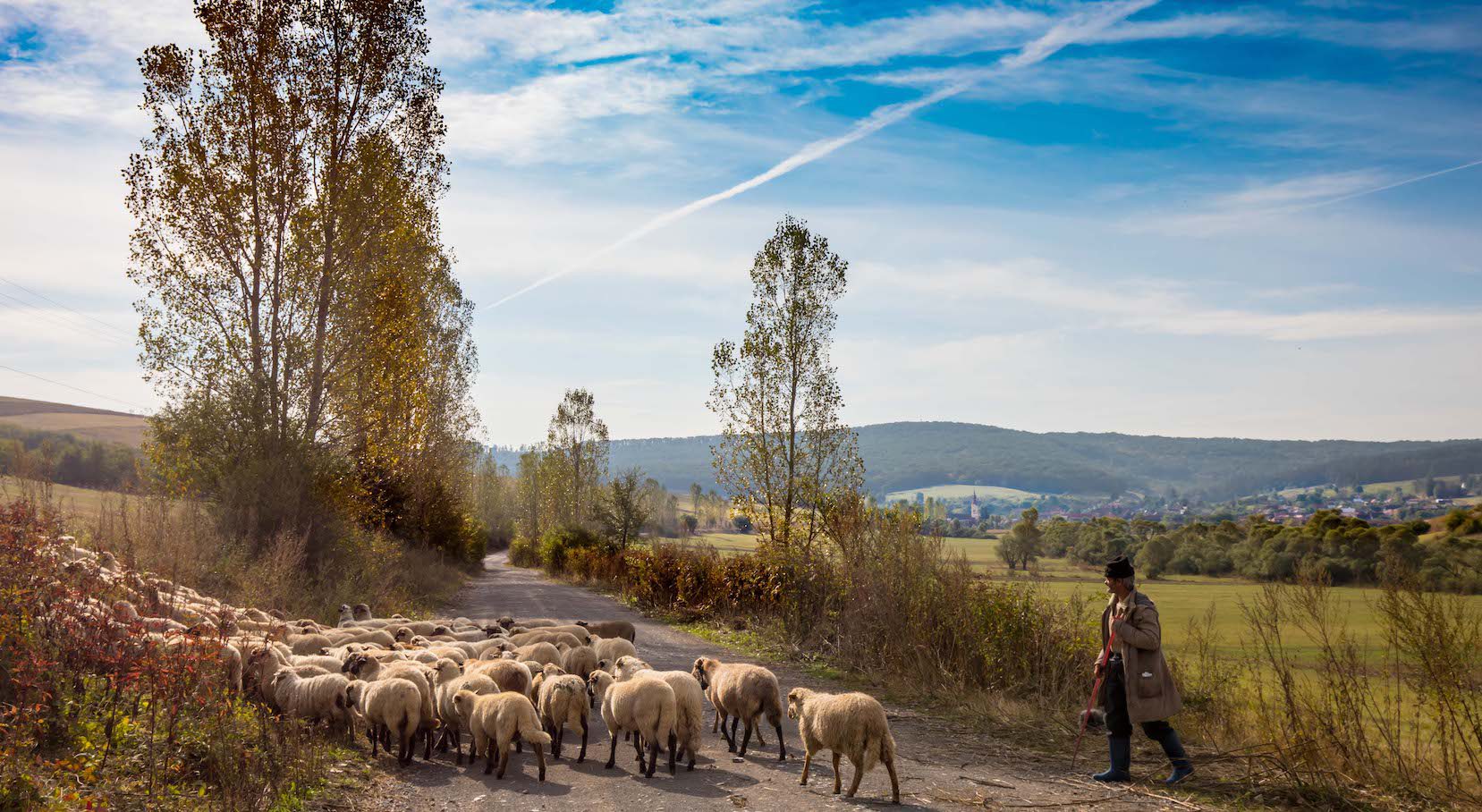
When visitors leave the cities, the same overlap appears at a smaller scale. In many villages hay is still stacked by hand, and the shepherd a visitor plans to meet tomorrow may confirm the time on WhatsApp. Southern Transylvania has a particular kind of village, because the Saxons, German-speaking settlers who arrived in the Middle Ages, built their communities around fortified churches. Viscri, in Brașov County, has a church built in the 13th century. It belongs to the UNESCO World Heritage listing of villages with fortified churches in Transylvania.
Today the village has a restaurant and guesthouse in a restored barn, run by a husband-and-wife team. It serves a slow-food menu and overlooks the fields most of its ingredients come from. A few minutes’ walk away, a ceramist who studied in England hosts workshops in a village house. The Beyond Journal’s guide to five favorite Saxon villages, which includes Viscri, Biertan and Meșendorf, describes more of this region.
Mălâncrav is a village with a fortified church on a hill. There a carpet weaver works on a wooden loom in traditional Saxon and Romanian designs, and she explains the meaning of the symbols to visitors. Walkers reach the village from Criș along a 13-kilometer stretch of Via Transilvanica, a hiking trail of about 1,600 kilometers that crosses Romania. The path passes shepherds’ huts and open fields before it descends to the village. Sighișoara is a medieval citadel town. A woodcarver known as the Spoonman carves wooden spoons and folk art there in a shop that doubles as a tea room. He tells visitors the stories behind each motif. Inherited skills are also how people earn a living in these villages and towns today, from the ceramics workshop to the loom to the carving bench.

Contemporary Culture in Historic Cities
Modern Romania also has a busy cultural calendar. Cluj-Napoca is one of the country’s largest cities. Travelers who visit Romania in June can see the Transylvania International Film Festival (TIFF) fill its cinemas and courtyards. It celebrated its 25th edition in 2026. In Timișoara, a city in western Romania, the Art Encounters biennial uses galleries, museums and industrial buildings across the city. Philippe Van Cauteren, former artistic director of the S.M.A.K. contemporary art museum in Ghent, Belgium, will curate the 2027 edition. In fact, Beyond Dracula received one of its first requests for a journey planned around the biennial in 2026. The Journal’s overview of cultural events in Romania covers these events and several others.
Hotels Set in Villages and Restored Buildings
The same overlap shapes where people sleep when they visit Romania. Hotel MATCA opened in fall 2023 in the village of Simon, near the town of Bran in the Carpathians. It has 16 rooms and suites and 10 private villas overlooking the Bucegi and Piatra Craiului mountains. Its name is the Romanian word for queen bee. Bethlen Estates, in the village of Criș in Mureș County, offers guesthouses in restored 300-year-old residences. Its website says the family has called the estate home since 1305. Once there, guests can go truffle hunting, ride horses or take a horse-drawn carriage through the countryside.
How to Visit Romania and See Both Sides
Beyond Dracula’s sample eight-day Transylvania itinerary links these places. It includes a Bucharest walking tour, three nights at Hotel MATCA, hikes along Via Transilvanica, workshops with a ceramist and a carpet weaver, and two nights at Bethlen Estates. Anyone planning to visit Romania who wants to see these layers in person can tell us which settings interest them. Then the team will design a private journey around them.
Get the Inner Story of Romania
"*" indicates required fields