Where to Stay in Romania: Village Guesthouses That Shape the Places Around Them
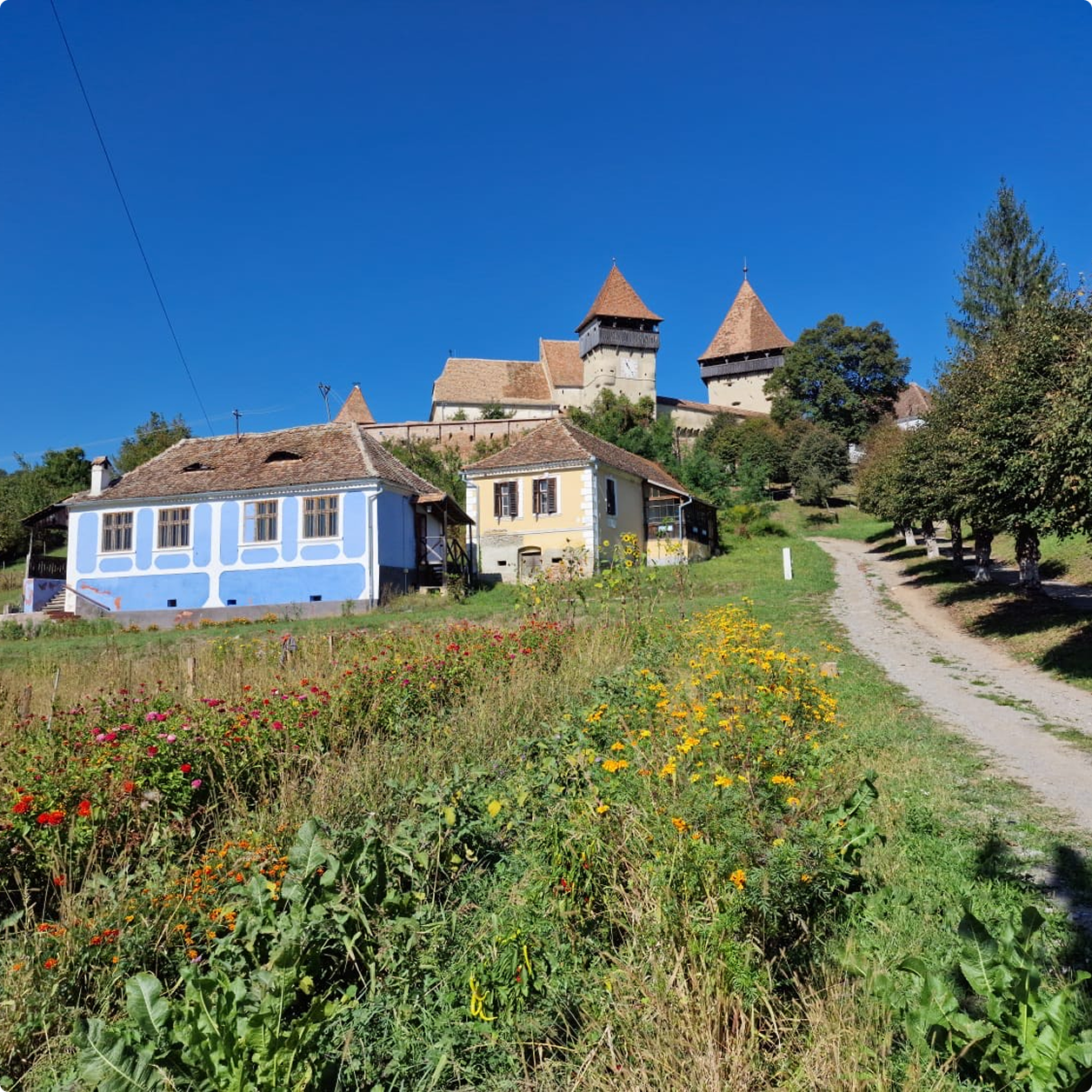
When people search for where to stay in Romania, they usually expect a list of beautiful hotels or luxury properties. There are many. Yet some of the most meaningful places to stay in the Romania countryside are not defined by design trends or star ratings. They are defined by how they exist within their villages.
If you travel to Transylvania or explore rural regions on one of our Romania private tours, you quickly notice something. In certain villages, the guesthouse is not an isolated project. It is part of a wider story. A restored building can bring back a forgotten craft. A reopened estate can create employment where there was none. A carefully renovated house can change how a community sees its own heritage.
These are the places worth paying attention to.
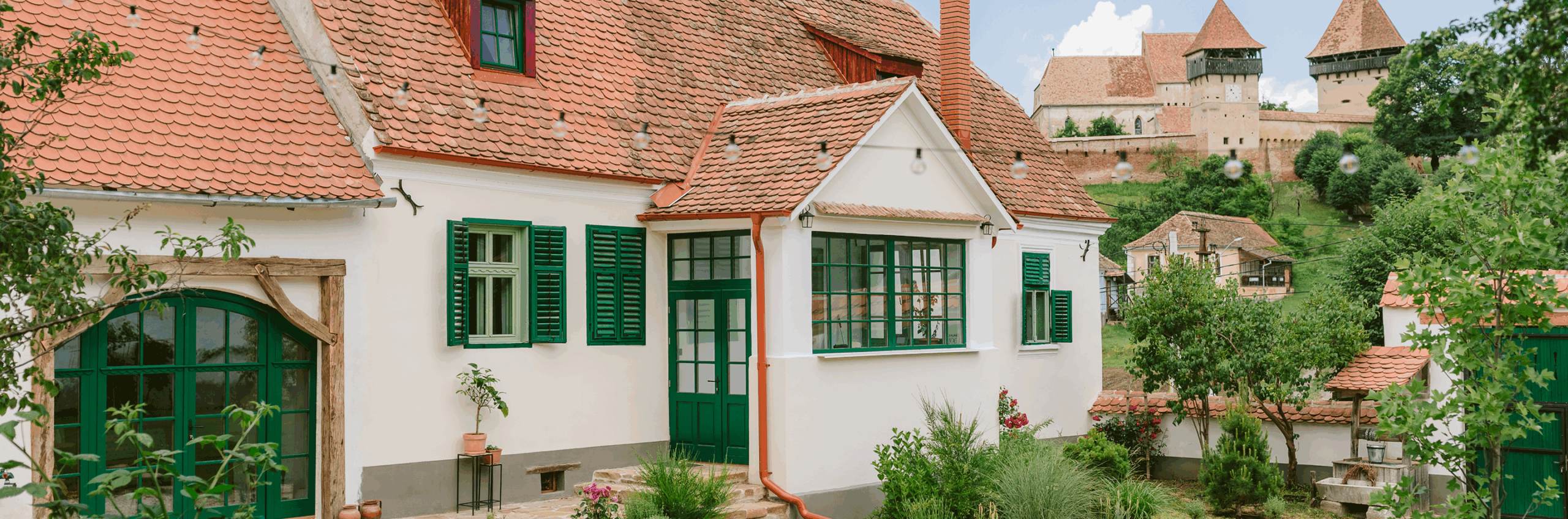
Alma Vii
Restoration That Reconnected a Village
Alma Vii is a small Saxon village in Transylvania, known for its fortified church and long, quiet streets. For years, like many villages in the region, it experienced depopulation and decline. Then restoration began, slowly and carefully.
Alma Via Guesthouse emerged as part of a larger conservation effort in the village, involving the restoration of several traditional Saxon houses rather than a single property. The project respected original layouts, preserved thick masonry walls, repaired timber structures and retained enclosed courtyards typical of Transylvanian Saxon architecture. Restoration work relied on local craftsmen and traditional techniques, reinforcing skills that had nearly disappeared from the area. Instead of reshaping the village to fit hospitality trends, the guesthouse adapted to the village’s existing scale and structure.
The reopening of these houses brought renewed activity to Alma Vii. Employment opportunities increased and the presence of visitors encouraged complementary local initiatives, from small scale food production to guided access to the fortified church. Alma Calma, also located in the village, operates at a more intimate scale yet follows a similar philosophy of integration. Together, these properties contribute to a wider sense of revival grounded in continuity rather than reinvention.
Guests who stay here wake to the sound of farm life and church bells. Meals rely on ingredients sourced locally and often seasonally.
For travelers researching guesthouses in Transylvania, Alma Via and Alma Calma represent a certain kind of approach to rural travel in Romania. It is not about retreating from village life. It is about entering it respectfully.
Ugron Castle
Restoration That Reopened a Landscape
In Zau de Câmpie, Ugron Castle stands as a reminder of Transylvania’s aristocratic past. The castle was built between 1908 and 1912 by Baron István Ugron, who had served as Austro Hungarian ambassador to Russia and the Ottoman Empire. Inspired by French architectural styles, the building once carried the nickname “the calendar castle” because of its symbolic structure of 365 windows, 52 rooms and 4 towers.
After nationalization during the communist period, the estate fell into decline. For decades it deteriorated. Its recent restoration has returned the castle to use as a heritage property and event venue, while also bringing employment and renewed visibility to the surrounding rural area.
Staying at Ugron Castle today is not simply about accommodation in a historic building. It places visitors inside a layered narrative of Transylvania Romania, where aristocratic history, political change and contemporary rural revival intersect. The reopening of the estate has altered the economic landscape of Zau de Câmpie, drawing visitors to a part of the country rarely included in traditional tours of Romania.
Viscri and the Model of Measured Tourism
Viscri is often cited in conversations about sustainable tourism in Romania. Its fortified church, protected by UNESCO, anchors the village. Over the past two decades, restoration projects have focused on preserving original architecture rather than reshaping it.
Guesthouses in Viscri operate within the structure of former Saxon homes. Facades remain intact. Courtyards retain their agricultural function. Local people are involved in maintenance, cooking and guiding. The result is a village that continues to function as a village.
Travel to Transylvania frequently includes Viscri, and rightly so. The lesson here is not scale but consistency. When tourism aligns with local rhythms, it strengthens rather than overwhelms.
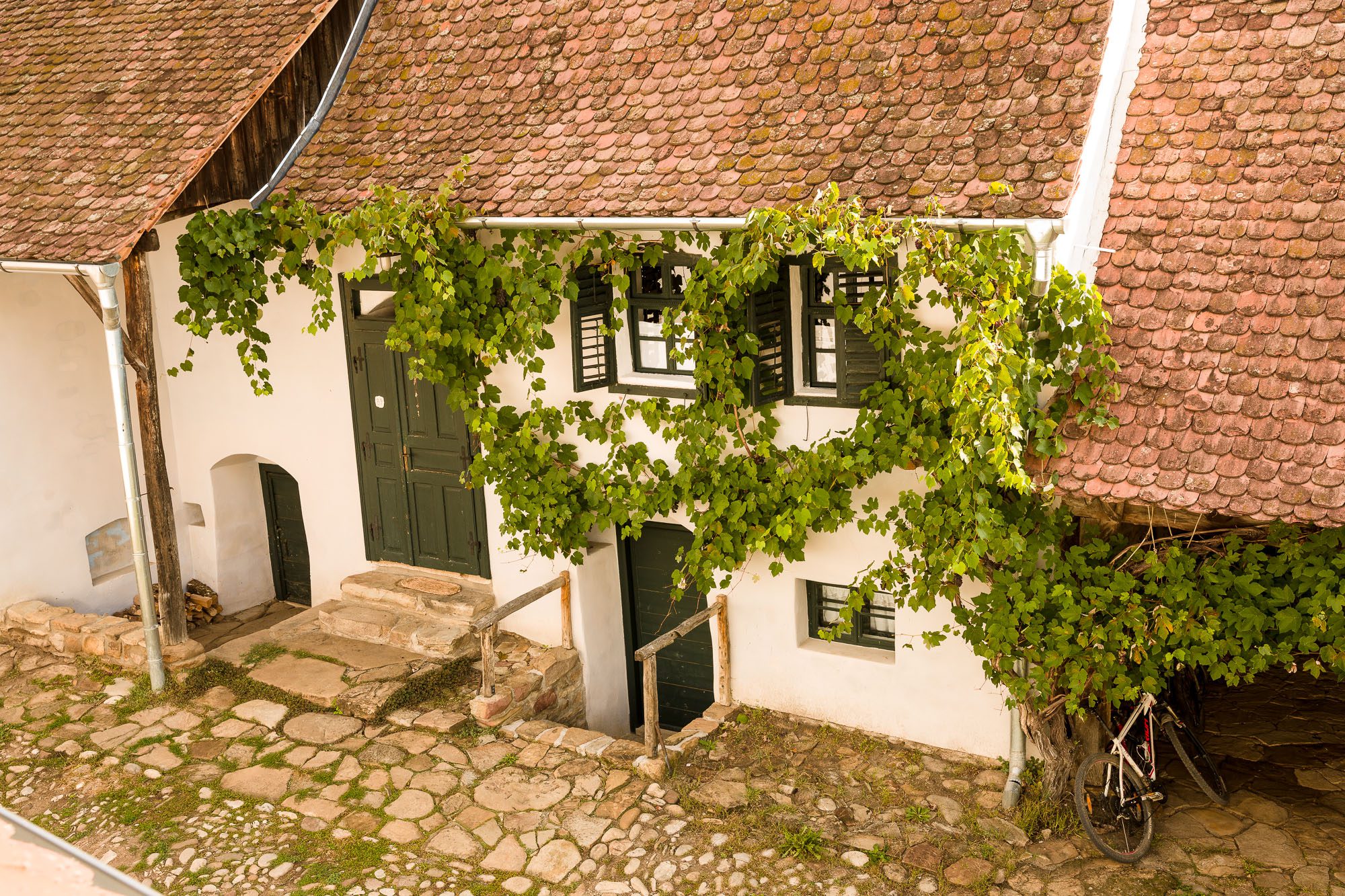
Cincșor
A Parish House Reimagined
In the village of Cincșor, the former Evangelical parish house and school were restored and reopened as a guesthouse. The project preserved the church complex and brought new life to a space that had stood empty.
The restored buildings now host cultural events, concerts and gatherings in addition to accommodating guests. This has reintroduced activity into the village center and created a meeting point for visitors and locals alike.
Cincșor demonstrates how architectural heritage can support contemporary life in the Romania countryside without losing its historical character.
Bethlen and MATCA
Other properties across Romania are working toward similar transformations. Bethlen Estate in Criș and MATCA in Șimon operate at a higher luxury level, yet both articulate a commitment to landscape, architecture and regional identity.
The most compelling hospitality projects in Romania are those that understand that the village is not a backdrop.
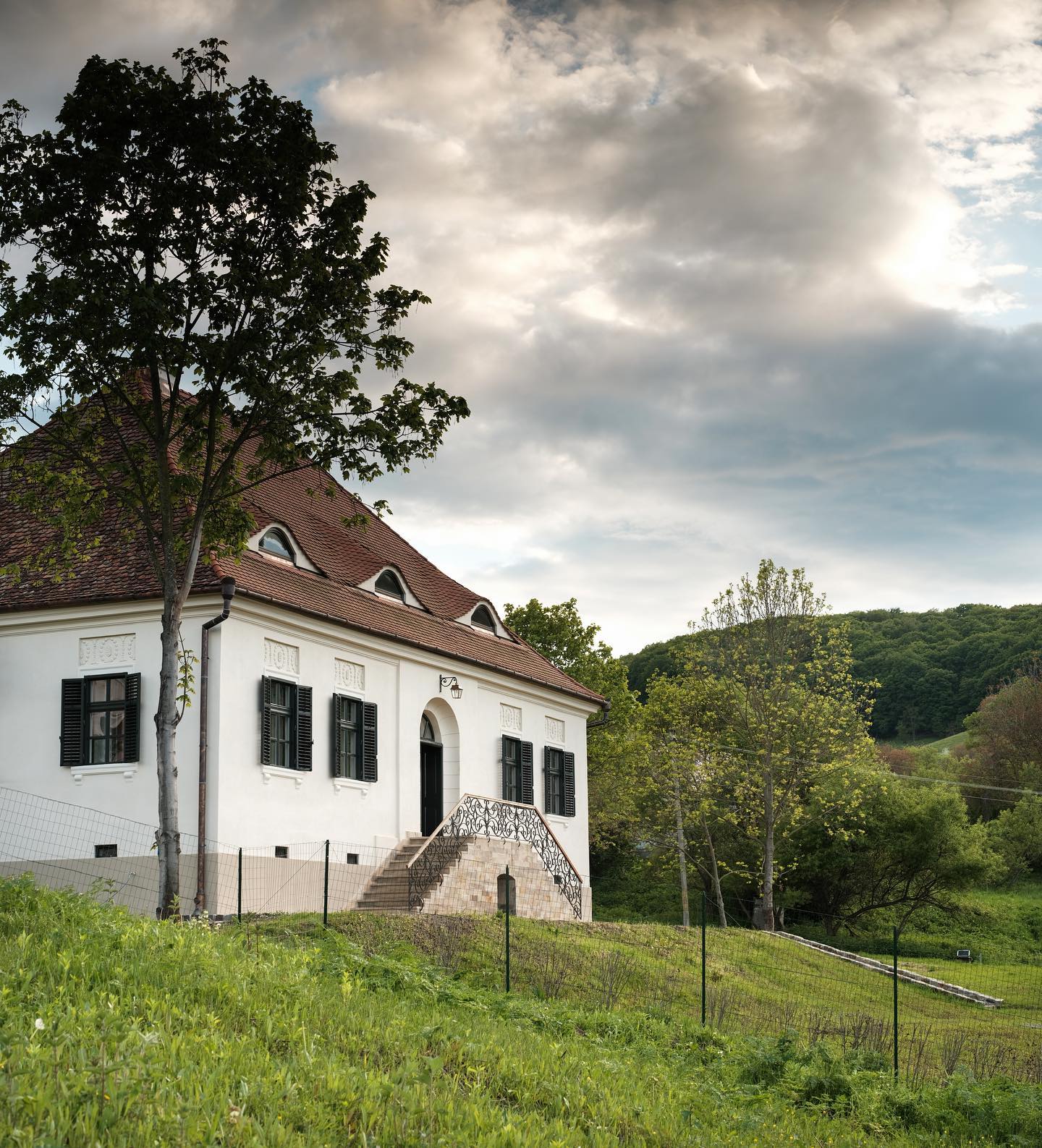
Why This Matters for Travel in Romania
Romania travel is often described through castles, monasteries and mountain roads. These remain important. Yet accommodation shapes the experience just as much as the itinerary.
Choosing where to stay in Romania influences local economies, architectural preservation and the continuity of village life. When a property hires locally, restores carefully and engages with its surroundings, it becomes part of a broader transformation.
And in the end, it is always the people who determine whether a place thrives.
When planning bespoke travel in Romania, we look for properties that contribute to their setting. The building matters. The history matters. The landscape matters. But what truly shapes a place is how it is inhabited.
That is where meaningful travel begins.
Get the Inner Story of Romania
"*" indicates required fields